Tuesday, September 18, 2012

CEDO 565 Week 5: The Change Process


The past two weeks during class we played a simulation game that revolved around the Change for Improvement Process in a K-12 setting. First off, playing the simulation online was a very good experience and gave a good example of what can be done with an online class. Second, the simulation was actually fun to play as well as being very insightful and informational about the change process. The frustrations were real. The successes gave us the feeling of "Finally! Results!" Having the end of game wrap up example sheet that outlines the process without playing the game wouldn't have been as enlightening. Looking at it now after playing the game I understand much better about how the change process can occur successfully. Substituting a High School English Department Chair with Vice President of Marketing you can adapt the process to business or other institutions.

Some rights reserved By JWILLOME

I've not been involved in a change for improvement process before. My present workplace is a very small private school and does not have many of the ingredients of the average K-12 public school system or even larger private school institutions. Many of the traditional elements of organization and of change just don't apply to where I am now. Never mind a thousand other contexts, conditions and variables, there are elements of the change process that I could use at my school, difficult as it may be.

Throughout most of this program, with the course of study and work we have done, I've been able to adapt it if necessary to fit my present situation. This leadership course however has been very frustrating to me because so many of the items covered and discussed do not apply in one context or another at my school. Frustrating also because the topics we are talking about are the things most needed at my school but the reality of setting them in place lies on Jupiter somewhere.

If and when I secure a position somewhere else, I feel I am better prepared to take a position of leadership for change. 

Wednesday, September 12, 2012

CEDO 565 Week 4: Teamwork & Change

This whole leadership thing is so hard to talk about in relation to my present employ. If you've picked up on anything I've talked about over the last year and a half you should have some idea. Rather, I'll talk about two contrasting change events that I wrote about for our Analysis of Change and Planning for Change assignment.

In both instances, I was in a leadership role, but of differing capacities and level of power. Both took place at a private English Language school in Taiwan.

Planning for Change:
Description: The addition of over 1000 new lesson plans and activities for 11 levels of English conversation classes for ESL teachers and students at Taiwan’s largest adult private English Language School (16 locations). I was the technical and writer’s team supervisor.

This project was headed by my best friend of many years and colleague. His ideas, decisions and leadership were well respected by our boss and he was/is an effective leader. This project was his idea and he pretty much had free reign with it after approval by our boss, the company president.

Because my friend was a good planner and leader, this project was very successful. Working together as a team on this we all collaborated, discussed, modified and helped each other. Decisions were a group effort because our experience and input were valued and respected.

In the end, our schools got a lot of new material as well as awareness and training. Teachers and students at these schools are most likely still using some of these materials.


Analysis of Change:
Description: Planning, Development, Preparation and (near) Implementation of a Blended ESL program at the same English Language School in Taiwan. I was director of the program.

This project began almost immediately after the above project was ending. I gathered many of the same team members together to work on this project. Our work as a team followed the same general course as the previous project. I learned from my friend how to make these things work.

The difference was that the curriculum project was headed by an effective leader whereas this blended learning project was ultimately headed by our boss, the company president. Similar to my present situation, he micro-managed many aspects of the project. He also was ill informed about technical and pedagogical issues related to the project. He often refused to listen to and accept sound advice but rather acted unilaterally according to his whims.

The president's method of leading and managing the project delayed, postponed and ultimately resulted in the program never taking off, wasting a lot of time, effort and money.


**********************************************************


I'm glad that I have had the opportunity to work on, with and lead successful teams. It makes me frustrated now where I am powerless to lead more effectively because of the context of leadership higher up. A positive result of working with ineffective leaders is that you know what not to do.

Monday, September 3, 2012

CEDO 565 Week 3: Reluctant Authority

Reluctant Authority:

I've been placed in a position of leadership that I didn't want. It's not that I shy away from leadership, just that I don't want this particular leadership position. Unfortunately (or so I seem to think), neither a new position nor a replacement has been made available at this time. Last year, I protested my position by not doing any actual leading but instead, doing work, work, work that needed to be done. Never mind the fact that the work needed to be done and that I only worked 1/2 time, I didn't go out of my way to lead. The school bumbled along just as it has in the past and I kept busy putting out fires.

Though my replacement isn't at hand I do have hope because there are now a couple of staff that I can train and hand over some of my work to, both clerical and administrative. I pray this will happen.

In thinking about the situation at my school I've come to the conclusion that as long as I am still there, I need to forget about thinking that my boss will change in such a way as to make dramatic changes in what happens at my school. I've now decided that as long as I'm there, I need to take on a larger leadership role to effect change that is within possibilities.

Image By: The Thinking Doll

Without much of a choice in the matter, I had to write a 5-year plan for our accreditation agency. It wasn't a team effort. There aren't enough people to form teams. Everyone else, including my boss, was up to their ears in other things. So, I've got this baby of an improvement plan. It's not too bad. It's needed. It's all my idea. Now I've got to run with it, with mostly an entirely new teaching staff not to mention mostly new students as well.

I like the idea in chapter 4 of the book about introducing programs with the benefits derived, not the details of the program itself. The benefits of successful implementation of the  5-year plan are potentially awesome and in a nutshell; resemblance of an achieving and functioning school.

If all goes well, I'll have the time to actually interact with my teachers and help build this school. I can already foresee some roadblocks and I will be tested. Wish me good luck skill.


Tuesday, August 7, 2012

CEDO 565 - Week 1: Follow the Leader

Workhorse

I'm a workhorse. I thrive doing things in the background, preferably uninterrupted so I can just get it done and move on to the next. My rise to Administrator at my current employ is partially due to this. I found things that needed to be done and I did them. I've done this in every position I've had. There you have it. Now I'm stuck because now I know everything and know how to do everything and I'm the one who did it.


Top Down

I'm stuck because my place of employ is mostly a dictatorial oligarchy. I'm often a yes man though sometimes I try to play the king's fool (some kings used the jester to relate to them the true feelings of the people through muse because the king did not have access to this information being isolated and surrounded by aristocracy and yes men). I often compare myself to Radar from M*A*S*H; I run the place without being in charge. I'm also stuck in the middle and those beneath and beside me overestimate my influence.

Just recently, myself and several others in leadership all agreed on an item, based on financial considerations from one perspective. The top however based the decision on a different financial perspective and it was the final word without any further reasonable discussion after I begged to differ.
 
 © Copyright alan fairweather and licensed for reuse under thisCreative Commons Licence

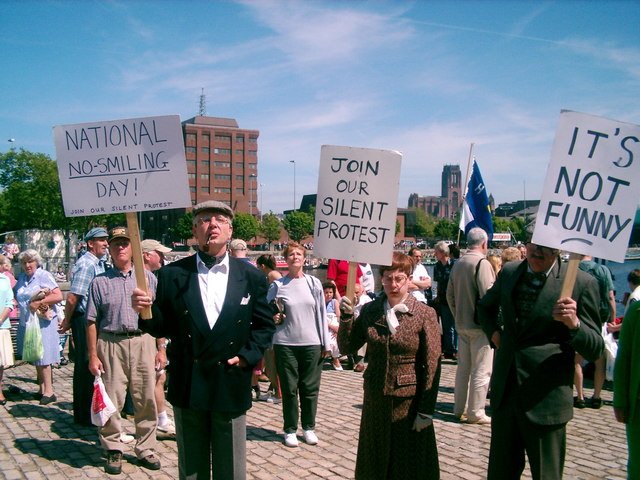
We're too small to protest. What? We want the kids to miss school? No. We just plod along hoping to make lemonade.


Leadership

The survey says .... I'm a structural kind of guy and this is true. I'm not inspirational, placating or diplomatic. I can be a good director and am getting better at trying to delegate. Without rehashing past gripes though, I really haven't had time to lead. I'm still a workhorse, but with a title.

However, there are certain areas, such as technology, where I do have freedom and have lead there where I could. Due to several variables and conditions, I just get to make a choice by myself because there is no team, committee or anyone else remotely qualified to give input. Then I try to lead with my choice. Perhaps through this course I will find avenues to lead that I didn't see on my map before.

Thursday, July 19, 2012

CEDO 555: Culminating Experience Project Introduction

Project Video Introduction


Where I currently work, there has not been a lot of integrating technology into the classroom for both lack of resources and time on my part. This fall, I hope at least the time I have to work with teachers and technology will change.

I want to introduce reflective blogging to both teachers and students. I chose blogging to begin my classroom technology infusion because the actual technology learning curve is relatively low. Getting both teachers and students into the habit may be a bit harder. Helping teachers assign meaningful weekly topics related to coursework will be important. I will most likely set up the logistical blogging administrative framework so teachers can focus on the blogging, training them only how to administer their classes once set up.

It is also hoped that once blogging becomes the norm, more creative types of media besides text and images can be used down the road to post in the blog with training in other expressive apps. Even though my aim is for reflective blogs, by doing so it may make the introduction of either cummulative or highlight ePortfolios easier in the future.

Foremost for teachers is that they become familiar with the media so they can assist students as well as provide working examples of what is expected from students. Teachers will be posting weekly, reflecting on their use of technology in the classroom, their successes, failures and challenges, both for their own use and for using it in the classroom and for teaching. It is hoped that the teachers participating will gain more confidence in the use of technology in the classroom as well as become peer mentors for others.

Teachers that will be blogging will also have their students doing weekly reflective blogs on class content and topics. It is hoped that student motivation, involvement, learning and retention of subject matter will increase through the use of blogs. Though having the students blog is of equal importance in this project, the outcomes of their blogging is more of an unknown to me whereas my primary focus for this project is to get teachers using technology in the classroom with blogging as a first step and other uses of technology to follow.

Tuesday, June 26, 2012

CEDO 555 - Post 2: Creative Commons


The question posed was, “How can you implement Creative Commons in the classroom or work situation?”

Before we discuss implementing the use of Creative Commons in the classroom with students, I think we need to step back and begin with some primer material in Media Literacy for teachers first as well as a Media literacy unit in some course or class for students.

Some good places to start are:


The use of Creative Commons will come as a result of first being informed of the issues of intellectual property, plagiarism, copyright, copyleft, fair use, public domain, citing sources and giving credit to works and the like. Activities focused on searching and finding media of all types that are acceptable to use in one form or another are necessary also.

At the same time, students will have to learn and to appreciate the value of their own work.This is a prerequisite to valuing the works of others and respecting any copyrights or attributions. Only then will students feel compelled to adhere to restrictions and guidelines set forth in copyright, fair use and attribution issues.

Of course, teachers must set examples for all of this for it to be effective. the use of Creative Commons media and attributions is just one part of a much larger topic to be addressed.

In using Creative Commons for finding images there is a distinctive skill that must also be taught and learned. When thinking of the image you want, often you have a picture in your mind and that's what you want because it will be perfect for what it is you are doing. However, easier thought than found. Quite often, the image you might be thinking of can be found at a royalty free stock photo site where you pay a fee or subscription. If you are looking for something free on the other hand, you need to be more creative and wise in your search.

First, give up the idea that you must find an image that matches the picture in your mind. (I know, sometimes you really need that Civil War battle scene because that's what you really need. Best of luck finding one you can use. Otherwise...) Think outside the box image. Think about what the feeling, emotion or main message is that you want to get across with the image. Try those words for searching. Try synonyms or two word summaries of those feelings and emotions. Or, think of another image that relates the same feelings or emotions. Example: I was trying to find an image to relate to the word "collaboration". Nothing came up really. "Cooperation"? Nada! How about an image of two people at two different computers? Too dorky and cliché. So I instead thought of "3-legged race", an activity that implied collaboration and cooperation. I found just what I was looking for.

Tuesday, June 5, 2012

CEDO 555 - Week 1: Under Construction

I can see that it's time to get down and dirty. 
Now our real work begins as we put together our portfolio and have to justify ourselves.


Looking now at what we have to do for this portfolio I've a few thoughts about the MEIT program itself. I don't think we have been adequately prepared to complete our portfolio as best as we could.

I think in the very first course, Succeeding in Online Learning, we should have had a better overview of what we will be doing throughout the program. We should have covered Standards as well as a summary of our portfolios and how the Standards are going to fit into it.

I think in the next couple of courses, we should have spent a little time choosing which Standards we would like to focus on throughout the rest of the program.

If we had known ahead of time that we needed to work on projects that addressed certain standards, we could have planned accordingly as we were doing our projects and work. This would have affected a lot of things. In our portfolio we choose a standard, we have a vision and mission and in essence, will be documenting what we want to become. Having foreknowledge of all of this, I perhaps would have chosen to do some things differently. I would have focused more.

As it stands now, I for one, may struggle a little bit putting together Artifacts for my standards. This may be true to some extent for Artifacts for each course. I perhaps would have geared more projects and work towards what my chosen standard was as well so as to document my expertise within that standard.

ARTIFACTS UNDER CONSTRUCTION